
By Evie Rahman March 24, 2026
Running a medical practice today involves much more than treating patients. Healthcare providers must also protect sensitive patient information, follow federal privacy regulations, and carefully evaluate every company that touches patient data. One area that often creates confusion is whether a payment processor requires a Business Associate Agreement (BAA).
Many practices assume that because a company processes payments, compliance is automatically handled. This assumption can create a serious risk. Payment vendors sometimes access billing data connected to medical services, which may qualify as protected health information (PHI). When this happens, HIPAA may require a HIPAA BAA payment vendor agreement.
Failure to properly evaluate vendors is one of the most common compliance gaps identified during audits and investigations. Even small practices can face penalties if vendors are not properly reviewed.
This guide explains when a business associate healthcare payments vendor requires a BAA, how to evaluate payment vendors, and how to use a practical HIPAA vendor checklist to protect your practice. By understanding these requirements, medical practices can strengthen medical practice payment compliance while reducing regulatory exposure.
Table of Contents
Understanding HIPAA Vendor Responsibility in Payment Processing

HIPAA requires healthcare organizations to protect patient information not only within their own practice but also across their entire vendor ecosystem. Any third-party company that handles protected health information while providing services may fall under HIPAA business associate rules.
Payment processing sometimes falls into a gray area because not all payment companies access PHI. Some vendors strictly process financial transactions, while others provide billing tools, reporting systems, or patient payment portals that may involve healthcare data.
The key factor is not whether the vendor processes payments. The determining factor is whether the vendor can access, store, transmit, or interact with PHI while providing services.
This distinction is critical because practices remain responsible for vendor compliance decisions. Regulators expect practices to understand vendor relationships rather than assume vendors manage compliance independently.
What a Business Associate Agreement Really Means
A Business Associate Agreement is a legal contract required under HIPAA whenever a vendor may access protected health information while performing services for a healthcare provider.
The purpose of the agreement is to clearly define how patient information must be protected and what responsibilities the vendor must follow.
A properly written BAA typically requires vendors to:
Core Requirements of a Business Associate Agreement
- Protect PHI using appropriate safeguards.
- Use information only for approved purposes
- Report data breaches within defined timelines
- Maintain administrative security controls
- Apply technical safeguards such as encryption
- Ensure subcontractors also maintain compliance
- Return or securely destroy data when contracts end
A BAA creates accountability. Without one, responsibility may fall entirely on the medical practice if a vendor mishandles patient data.
Understanding Protected Health Information in Payment Workflows
Many compliance problems happen because practices misunderstand what qualifies as PHI in payment environments.
PHI is not limited to medical charts. It also includes billing data connected to healthcare services.
If payment information can be connected to a patient’s treatment or identity, it may be considered PHI.
Examples include patient statements, billing reports, payment histories related to treatment, and account balances tied to medical services.
Examples of PHI in Payment Environments
- Patient names connected to invoices
- Medical billing statements
- Insurance payment records
- Patient account balances
- Payment plans for procedures
- Collections related to treatment
- Payment portals showing patient balances
If payment vendors interact with this type of information, HIPAA requirements might apply.
When a Payment Vendor Needs a BAA
Determining whether a payment processor needs a BAA depends on how the vendor interacts with patient data. Vendors that simply transmit card transactions without accessing healthcare data may not qualify as business associates.
However, vendors that provide healthcare billing tools or integrated payment solutions often do qualify.
Medical practices should focus on data exposure rather than vendor marketing claims.
A vendor saying they “support healthcare” does not automatically mean they accept HIPAA responsibility.
Payment Vendor Situations That Typically Require a BAA
- Patient payment portals connected to medical accounts
- Billing systems tied to treatment records
- Recurring billing for medical services
- Healthcare collections support
- Reporting that includes patient identifiers
- Integrations with practice management systems
- Storage of patient billing profiles
When vendors operate in these areas, a BAA is typically required.
When a Payment Vendor May Not Require a BAA
Some payment vendors operate only as financial transaction processors and never access PHI. These vendors may fall under PCI compliance requirements rather than HIPAA.
The difference depends on whether payment data is separated from healthcare data.
Payment Situations That May Not Require a BAA
- Standalone card terminals with no patient data
- Payment gateways that tokenize transactions
- Banks process card payments only
- Processors with no access to billing systems
- Financial institutions handling deposits only
Even in these cases, practices should still document their evaluation decisions as part of medical practice payment compliance procedures.
Why Vendor Assumptions Create Compliance Risk
One of the biggest compliance mistakes medical practices make is assuming vendors automatically handle compliance requirements.
In reality, HIPAA requires covered entities to evaluate vendors and determine whether BAAs are necessary.
Common misunderstandings include assuming PCI compliance equals HIPAA compliance or believing large vendors automatically sign BAAs.
These assumptions can create risk during investigations.
Common Vendor Compliance Mistakes
- Never requesting BAAs
- Assuming vendors are compliant without verification
- Not reviewing vendor contracts
- Using general business payment tools
- Allowing PHI in payment descriptions
- Failing to document compliance decisions
A structured HIPAA vendor checklist helps practices avoid these mistakes.
A Practical HIPAA Vendor Checklist for Payment Providers
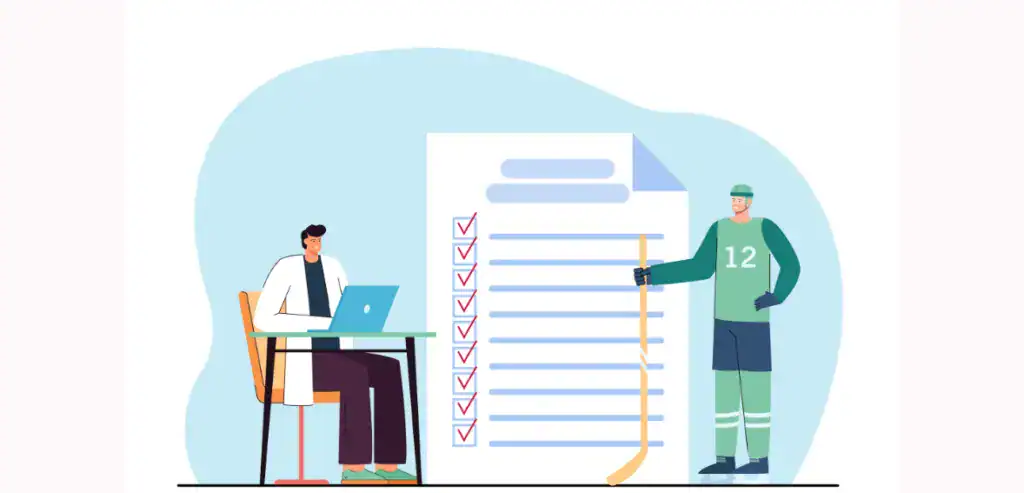
Medical practices should always evaluate vendors using a structured review process. This ensures consistency and demonstrates due diligence if regulators ever review compliance efforts.
A strong review process should focus on data access, security controls, and contractual responsibilities.
HIPAA Vendor Evaluation Questions
- Do you sign business associate agreements?
- Do you access protected health information?
- Do you store patient billing data?
- Do you integrate with medical software?
- What encryption standards protect data?
- How do you detect security threats?
- What is your breach reporting process?
- Do subcontractors sign BAAs?
- How long is data retained?
- Where is data stored?
These questions help identify whether a vendor qualifies as a business associate healthcare payments provider.
Important Questions to Ask Before Signing a Payment Contract
Vendor evaluation should always happen before signing agreements, not after implementation.
Practices should clearly understand vendor compliance positions before committing to long-term contracts.
Payment Vendor Due Diligence Questions
- Are you HIPAA compliant?
- Will you sign a BAA if required?
- What healthcare clients do you serve?
- What safeguards protect patient data?
- Do you perform security audits?
- What certifications do you maintain?
- How do you handle breaches?
- Do you provide compliance documentation?
Vendors that cannot clearly answer these questions may present unnecessary risk.
Key Terms Every Payment Vendor BAA Should Include
Not all BAAs provide equal protection. Some agreements are written to limit vendor liability rather than protect healthcare providers.
Practices should review BAAs carefully to ensure they include essential protections.
Critical BAA Contract Elements
- Permitted uses of PHI
- Vendor security obligations
- Breach notification timeframes
- Subcontractor compliance rules
- Data return requirements
- Data destruction procedures
- Liability definitions
- Termination rights for compliance failures
A strong agreement supports long-term HIPAA-compliant payment processing strategies.
Warning Signs a Payment Vendor May Not Support HIPAA Compliance
Practices should watch for signs that vendors may not be suitable for healthcare environments.
Some companies market to healthcare but avoid accepting HIPAA responsibility.
Payment Vendor Compliance Red Flags
- Refusal to sign BAAs
- Unclear compliance answers
- Generic security statements
- No healthcare references
- No breach notification terms
- Weak contract protections
- Limited security transparency
These signals may indicate the vendor is not prepared for healthcare compliance expectations.
How Payment Processes Can Accidentally Create HIPAA Violations
Even compliant vendors cannot prevent mistakes caused by internal workflows. Practices must design payment processes carefully to avoid unnecessary PHI exposure.
Many violations result from simple operational decisions rather than technical failures.
Payment Workflow Risks to Avoid
- Adding treatment details in payment notes
- Emailing invoices with medical descriptions
- Using unsecured text payment links
- Including PHI in payment memos
- Allowing unrestricted staff access
- Using shared login credentials
Training staff and designing secure workflows reduces these risks significantly.
Best Practices for Medical Practice Payment Compliance
Strong compliance programs focus on prevention rather than reaction. Medical practices should treat payment compliance as part of overall HIPAA risk management.
Establishing consistent internal procedures reduces risk exposure.
Payment Compliance Best Practices
- Limit PHI exposure in billing systems
- Use secure patient payment portals
- Train staff on privacy requirements
- Maintain vendor review documentation
- Conduct annual compliance reviews
- Monitor system access controls
- Document vendor decisions
These steps strengthen long-term vendor compliance management.
How BAAs Protect Medical Practices From Risk
Some practices view BAAs as paperwork. In reality, they serve as critical legal protection tools.
BAAs help define responsibilities and reduce uncertainty if incidents occur.
Risk Protection Benefits of BAAs
- Clarifies vendor accountability
- Defines breach reporting duties
- Documents compliance intent
- Creates contractual protections
- Demonstrates regulatory diligence
- Supports legal defense positioning
Strong documentation can significantly reduce enforcement exposure.
PCI Compliance Versus HIPAA Compliance in Healthcare Payments
Many providers assume PCI compliance alone is enough. This is incorrect.
PCI protects cardholder data.
HIPAA protects patient information.
Both may apply depending on payment workflows.
Understanding the difference helps practices make better vendor decisions and supports medical practice payment compliance planning.
How to Document Vendor Compliance Decisions Properly
Documentation is one of the most important parts of compliance. Regulators often focus more on documentation than technology.
If decisions are not documented, they may be viewed as never having occurred.
Vendor Compliance Documentation Practices
- Maintain vendor inventories
- Document risk evaluations
- Store signed BAAs
- Keep security questionnaires
- Track compliance reviews
- Maintain policy documentation
- Record decision justifications
Documentation proves compliance efforts even if problems occur later.
When Medical Practices Should Review Payment Vendors
Vendor compliance should be reviewed regularly. Compliance is not a one-time activity.
Changes in technology, contracts, or regulations may require reassessment.
Vendor Review Triggers
- Contract renewals
- Software updates
- Security incidents
- Workflow changes
- New integrations
- Ownership changes
- Regulatory updates
Annual reviews are considered a minimum best practice.
How Small Medical Practices Can Simplify Vendor Compliance
Smaller practices often worry that compliance is too complex. In reality, a simple structured process can manage most vendor risks.
Consistency matters more than complexity.
Simple Vendor Compliance Process
- List all vendors
- Identify PHI exposure
- Request BAAs where needed
- Document vendor responses
- Remove high-risk vendors
- Standardize review procedures
- Assign compliance oversight
Even small improvements greatly reduce compliance exposure.
How Regulators Evaluate Vendor Compliance Failures
Regulators expect healthcare providers to understand vendor risks. Enforcement actions often highlight vendor management failures.
Common regulatory findings show similar patterns.
Common Vendor Compliance Findings
- Missing BAAs
- Poor vendor oversight
- Lack of documentation
- Weak risk analysis
- Improper vendor selection
- Failure to monitor vendors
Understanding these trends helps practices avoid similar problems.
The Growing Importance of Healthcare Payment Vendor Compliance
Healthcare payment systems continue evolving. Integrated billing, digital payments, and automation tools increase vendor involvement.
As technology expands, vendor oversight becomes more important.
Emerging Healthcare Payment Compliance Trends
- Integrated healthcare payment platforms
- Patient financing tools
- Automated billing systems
- Digital healthcare wallets
- Vendor cybersecurity reviews
- Third-party risk scoring
Practices that prepare early will be better positioned for future compliance expectations.
Final Payment Vendor Compliance Checklist
Before selecting or renewing any payment vendor, practices should confirm key compliance elements.
A final review helps ensure no major issues are overlooked.
Final Vendor Compliance Checklist
- BAA signed if required
- HIPAA responsibilities defined
- PCI compliance verified
- Security safeguards documented
- Breach procedures confirmed
- Data storage reviewed
- Risk documented
- Contracts evaluated
This checklist supports strong HIPAA vendor checklist practices.

Conclusion
Payment vendors play a larger role in healthcare compliance than many medical practices realize. While not every processor requires a business associate agreement, every practice must understand how vendor relationships affect HIPAA obligations.
Evaluating vendors carefully, requesting BAAs when appropriate, and documenting decisions are essential parts of responsible compliance management. A structured approach helps practices reduce risk, strengthen vendor oversight, and improve operational stability.
Using a practical HIPAA vendor checklist and understanding business associate healthcare payment responsibilities allows practices to make informed decisions instead of risky assumptions. Compliance is not just about avoiding penalties. It is about protecting patient trust and maintaining professional credibility.
Medical practices that proactively manage payment vendor compliance position themselves for long-term success. Taking time today to review vendors, confirm agreements, and strengthen compliance processes can prevent serious regulatory problems tomorrow.
FAQs
Does every healthcare payment processor need a BAA?
No. A BAA is only required if the vendor accesses protected health information. Vendors that only process card transactions without PHI exposure may not require one.
What happens if a required BAA is missing?
If a BAA is required but not in place, the practice may face HIPAA violations, penalties, and liability if a breach occurs.
How can a practice know if a payment vendor is HIPAA compliant?
Practices should request compliance documentation, ask security questions, and confirm whether the vendor signs BAAs as part of their HIPAA-compliant payment processing approach.
How often should vendor compliance reviews occur?
Vendor reviews should occur annually and whenever contracts, systems, or workflows change.
What is the first step in improving payment vendor compliance?
Start by identifying all vendors, determining who touches PHI, requesting BAAs where needed, and documenting decisions to improve medical practice payment compliance.